
Over the past few weeks, we have seen an uptick in calls about Coxsackievirus. So, what is it? And what do you do if your child is exposed?
Coxsackievirus belongs to a family of viruses known as enteroviruses. It can be spread by touching an object with the virus and then touching your face, or via respiratory droplets (coughing and sneezing). Though it can present itself in a variety of ways in the body, it commonly manifests as Hand-Foot-and-Mouth Disease in children under 5 years of age.
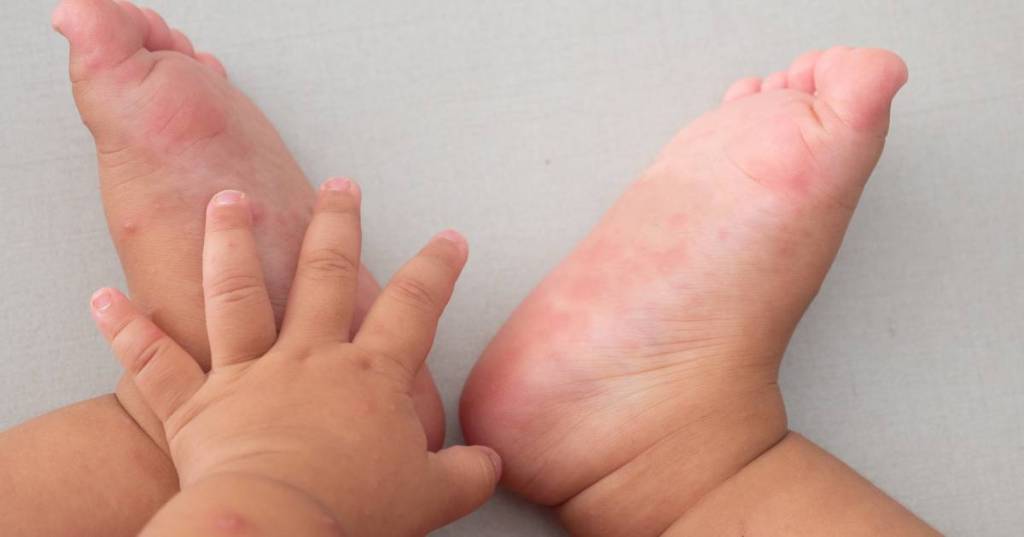
Signs and symptoms of Hand-Foot-and-Mouth Disease include:
- Fever
- Fatigue
- Mouth sores
- Rash
- Sores on the palms of the hands and soles of the feet
- Headache
- Sore throat/pain with swallowing
Most children develop symptoms within 3-6 days of exposure and fully recover within 7-10 days. A diagnosis of Hand-Foot-and-Mouth Disease is made via examination or reported symptoms and is managed like most other viruses – with rest, fluids, and fever management. If your child has sores in their mouth or throat, it can make eating and drinking difficult. In some cases, a homemade “magic mouthwash” can be created using 1 teaspoon of Benadryl and 1 teaspoon of Maalox which is mixed and then painted on the affected areas in the mouth for pain relief.
Return to school or daycare is allowed once your child has been fever-free (without the use of fever-reducing medications) for at least 24 hours and when the sores are flat and dry/mostly healed.
The best way to avoid the spread of Coxsackie virus is to encourage good hand washing and to stay home when sick.
As always, if you have any questions or concerns, please give us a call! We are happy to help 😊
Resources:
Coxsackievirus Infections in Children – HealthyChildren.org
Coxsackievirus in children: How serious is it? – Mayo Clinic
 From the Triage Desk
Leave a comment