
RSV (Respiratory Syncytial Virus) has been a hot topic in the media this year. Between an uptick in cases and a new vaccine on the market, it is taking the news by storm. But what is it? And how should we, as parents, navigate the information overload?
What is RSV and How Does It Spread?
It is important to start by understanding the virus and how it presents. RSV is a common respiratory virus that, in most people, mimics a mild cold. Signs and symptoms can include congestion, low grade fever, a dry cough, sore throat, and/or sneezing. It is spread through infected droplets in the air by sneezing or coughing and can also be transferred by direct contact with an infected person, for example by handshake. Most of the time, the virus will resolve on its own and symptoms are managed by pushing fluids, using acetaminophen or ibuprofen for fever/pain, and resting.

I’m Scared of My Child Getting RSV – Will They Be Hospitalized?
Occasionally, and especially in patients that are more at-risk, secondary infections like bronchitis or pneumonia may occur and require intervention. Because babies and the elderly fall into the category of at-risk (due to weaker/underdeveloped immune systems), we tend to see an emphasis placed on protecting those two groups. Additionally, immunocompromised individuals or those with underlying respiratory conditions like asthma should take extra care during RSV season (typically between October-April, although this can vary).
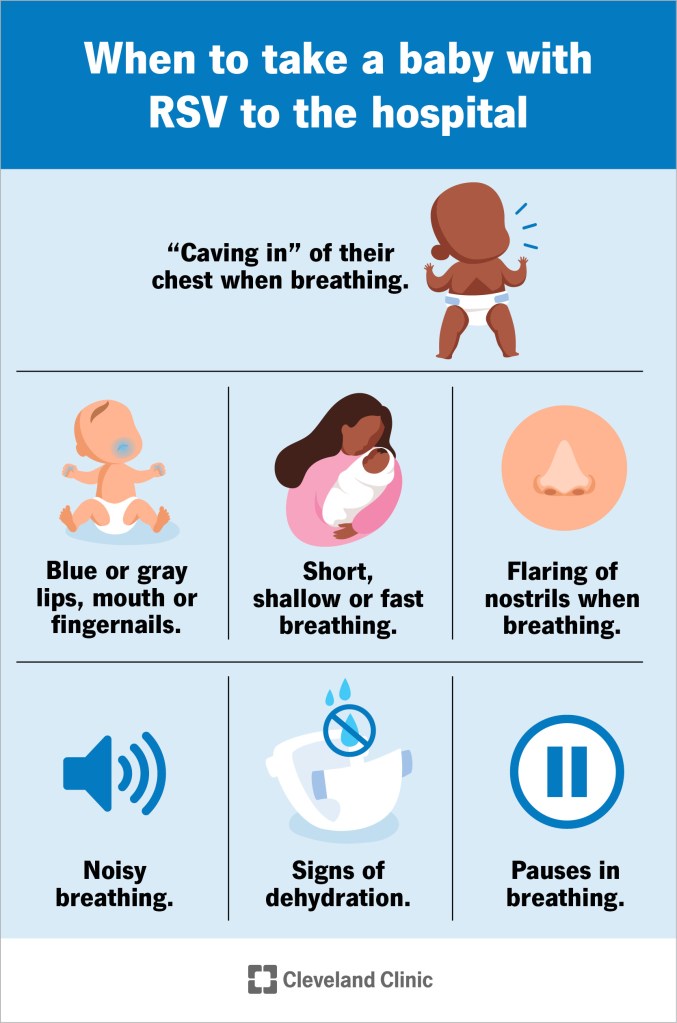
Hospitalization from RSV usually occurs when breathing has been compromised or a patient has become dehydrated. If your child has RSV (or suspected RSV) and has rapid, labored breathing or is retracting (where the skin pulls in around the rib cage as they breathe forcefully with their belly), they will need immediate intervention. Other symptoms that require intervention include a bluish color to the lips or fingernails, nasal flaring, excessive sleepiness, poor feeding, wheezing, signs of dehydration, or fever.
Why Doesn’t the Office Automatically Test for RSV?
Testing for RSV is not generally done unless a child is sick enough to be seen in the Emergency Department as disease and symptom management do not change with a diagnosis.
The New RSV Vaccine Is Here – What Do I Need to Know?
The RSV antibody should be given to all babies born during their first RSV season and some older babies in their second season (your pediatrician will determine this). Pregnant women that are 32-36 weeks between the months of September – January can receive the RSV vaccine which will protect the baby once born.
The goal with immunization is to prevent severe illness and reduce hospitalization rates.

What is the Difference Between an Antibody and a Vaccine?
An antibody is a molecule that binds to and neutralizes a virus. It works immediately to fight an existing infection and is used in those with weakened immune systems who may not be eligible for vaccines yet. A vaccine is an inactivated strand of the virus injected to train the body to fight a future infection.
What Are the Best Ways to Stay Healthy During RSV Season?
If you have a baby or an immunocompromised/high-risk child, the best thing you can do during RSV season is to stay away from known sick people, practice good hand hygiene, ask family/friends not to kiss your baby, and call your doctor with any concerns.
Stay well!
Resources:
RSV (Respiratory Syncytial Virus) | CDC
Transmission of RSV (Respiratory Syncytial Virus) | CDC
 From the Triage Desk
Leave a comment