
Here in New England, we are all familiar with buggy summers. While hats, bug spray, and long pants can certainly help keep insects at bay, the occasional bite or sting is inevitable. Here are a few tips for pain and itch relief and advice for what to do when more serious reactions or infections occur.

- If your child has been stung by a bee/wasp/hornet or other stinging insect, check the area for any stinger left behind. If there is one, remove it completely.
- Wash the area of the bite/sting with soap and water and gently dry the area.
- If the area is painful, apply a cold cloth filled with ice for 10-20 minutes. You can also give your children Tylenol or Motrin if ice is not enough.
- Apply a thin layer of antibiotic ointment to the area.
- If the area is itchy, apply a thin layer of hydrocortisone 1% ointment (available over the counter)
- Baking soda paste (baking soda with a small amount of water turned into a paste that is applied to the skin) can also provide relief.
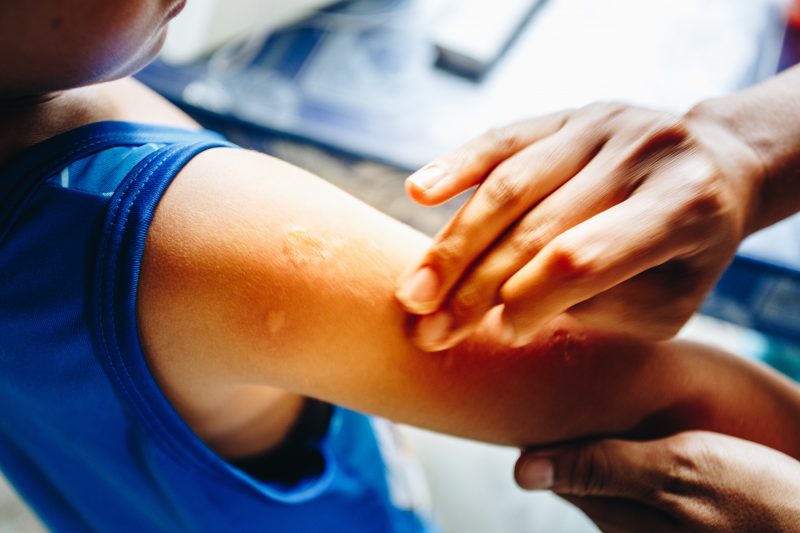
If your child has had a bite or sting and you notice swelling, hives, or widespread itching that may indicate an allergic reaction, give them a dose of Benadryl and call your doctor for further advice. If ever a child has facial swelling, difficulty breathing, a blue hue to the lips, or vomiting, seek immediate medical assistance. If your child has a known allergy to stinging insects and has been prescribed an Epi Pen, be sure to always have one handy and an allergy action plan available for any teacher, coach or caregiver who may be supervising them.
If your child’s bite or sting has suddenly become more painful or you notice that the affected area is red and swollen, hot to the touch, hard, or draining/oozing, please call your doctor or seek medical attention. On occasion, bites and stings can become infected and may require antibiotics.
And remember – if you’re ever unsure about what you are looking at, feel free to give us a call or send a picture through MyChart!
 From the Triage Desk
Leave a comment