
If you have ever had a teething baby, you know that it can feel like one of life’s less pleasant rites of passage. Sleep is sometimes disrupted, drooling is nonstop, and crying spells are more frequent. By understanding what to expect and how to address discomfort, you can help your baby through some of the harder moments.
Babies typically start teething between the ages of 4 to 7 months of age, but some may begin earlier than that (and some later). The first teeth to come in are the two in the bottom center (the central incisors).
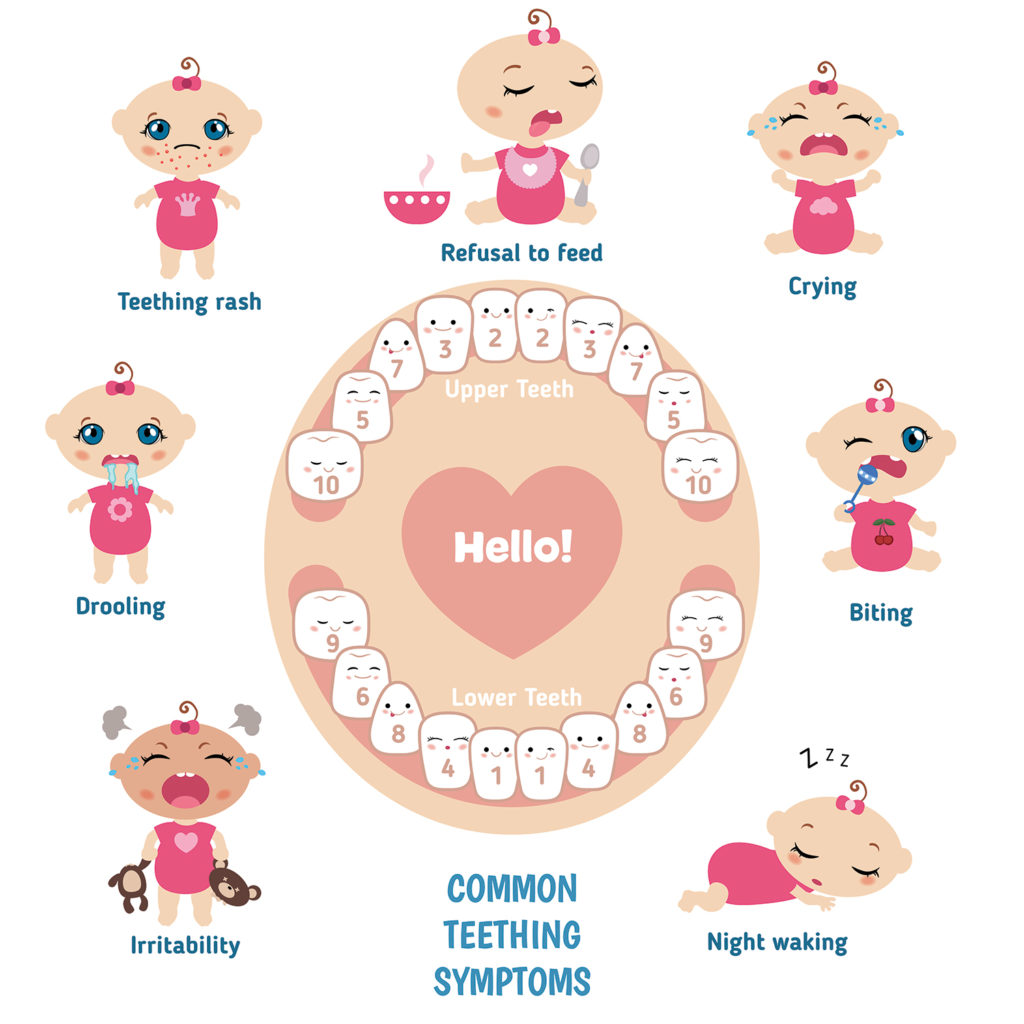
Before you can see any teeth popping through the gumline, you may notice that your baby is drooling more, putting their fingers or other objects in their mouth, or trying to chew on anything they can. They may have flushed cheeks or a rash around their mouth and their gums might appear a bit inflamed or swollen. Often, they will be fussier than normal, awake more overnight, and tearful. You may also notice that their feeding patterns change (refusing to nurse or wanting to nurse more, rejecting bottles, less interested in food). This is because the gum pain is making it difficult for them to suck or chew like they normally do. Additionally, you may notice a change in their stool patterns, including looser, more watery stools that are typically caused by all the drool and mucous they are swallowing.
To ease baby’s pain, there are a few things you can do:
- Freeze a wet washcloth and let them chew on it. Washcloths are more malleable than plastic teething rings and can provide relief to swollen gums.
- Try gentle gum massage with a clean finger.
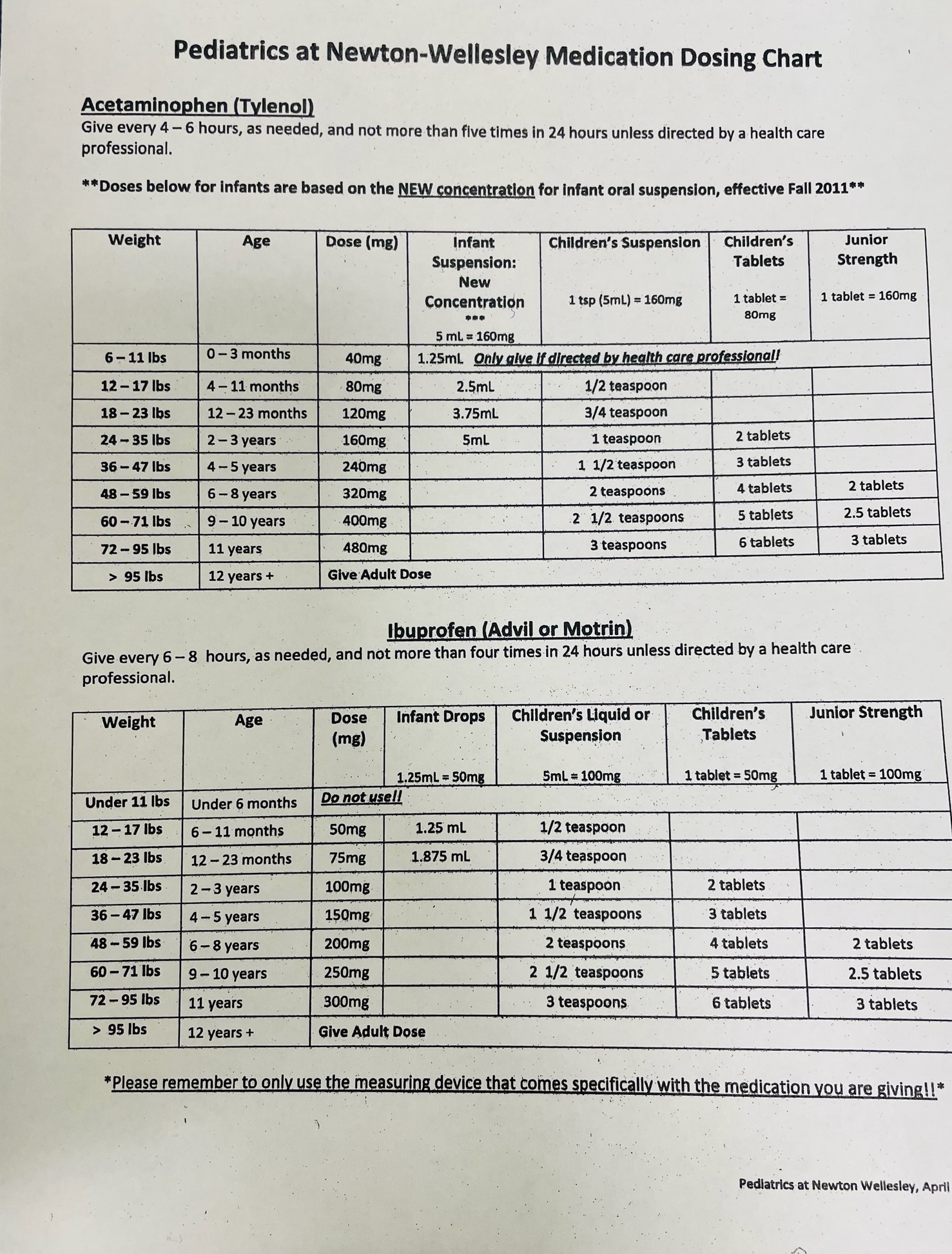
- For babies under 6 months of age, try a dose of baby Tylenol 30 minutes prior to offering a bottle/breastfeeding or putting them down for bed to see if they can eat or sleep more comfortably.
- For babies over 6 months of age, Tylenol or Motrin are both acceptable medications to administer for pain relief. Please see our dosing chart for more information.
- We advise AGAINST Orajel or other oral numbing agents containing benzocaine
If you find that your child has a fever of 100.4 or higher or is putting their fingers in their mouth and ears, especially if they are congested as well, please let us know. Teething symptoms and ear infection symptoms are quite similar in babies and occasionally one is mistaken for the other. And as always, if you have any questions or concerns, please give our office a call.
 From the Triage Desk
Leave a comment