
Trying solids for the first time is very exciting for both baby and parents! But if you’ve never introduced solids to a baby before, you probably have a few questions. Here are some tips for a successful foray into the wonderful world of food!

Make sure your child is ready.
Does your child have good neck and core support? Can they sit up on their own? Are they showing interest in solids (reaching for the food that you are eating or bringing objects to their mouth)? Some babies may show signs earlier than others (closer to 4 or 5 months of age) while most babies are ready by 6 months of age. If you offer solids and they spill out of your little one’s mouth or they seem disinterested, it’s OK to wait and try again later.
Pay attention to texture and size.
The first time you offer solids, make sure to thin them out well with breastmilk or formula. This way, baby is getting used to a new taste without being completely overwhelmed by a thick texture/new consistency. Purees are generally best at first, followed by foods chopped into very small pieces as they become more confident in their chewing and swallowing and as their pincer grasps strengthen. Make sure to cut cylindrical or spherical foods into small pieces and strips so that your child does not choke.
How should I introduce new foods?
One at a time! Always make sure to introduce one new food at a time and wait 24 hours before trying another new one. This ensures that if your baby ever has an allergic reaction to a food, you can quickly identify what caused it. There is no food you MUST start with, but we recommend orange foods first (sweet potatoes, carrots, squash) if you are looking for guidance as they are generally well-received by babies.
What about introducing allergens?
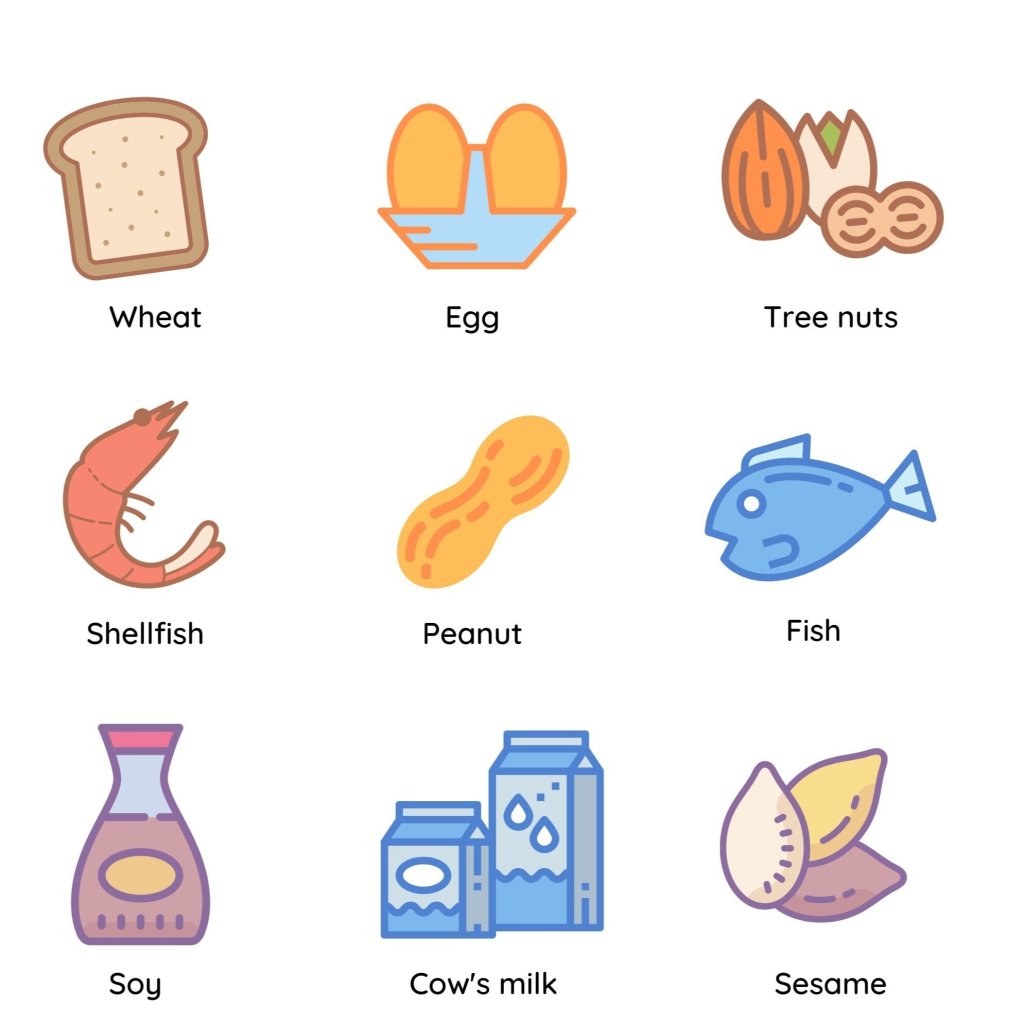
Potential allergens (think tree nuts, sesame, egg, fish, etc.) can be introduced alongside other foods – there is no need to wait. In fact, there is exciting new research that shows that the introduction of potential allergens earlier in a baby’s life actually reduces their risk of developing allergies to those foods. If your baby has severe eczema and/or an egg allergy, however, some additional screening/supervision may be necessary when introducing particular allergens (like peanut products). Be sure to speak with your pediatrician about the introduction of allergens when you are ready to start solids. If you have just given your baby a new food and they have a reaction to it, call us right away. If your baby is in respiratory distress, call 911.
Is there anything I should avoid?
Do NOT give a baby under one year of age cow’s milk or honey.
What about Baby Led Weaning?
Some parents choose to follow the Baby Led Weaning model of introducing solids. This is basically a way for a child to be in control of their feeding and move right into family dining without special/separate meal preparation. The key to this is to still introduce one food at a time to monitor reactions and to be sure to offer food that is not a choking hazard. Soft foods should be cut into strips and small pieces, hard/crunchy raw foods like tortilla chips or raw vegetables should be avoided, and extra caution must be taken with sticky foods like peanut butter that could be harder for a baby to manage. A baby must also have excellent core and neck strength and be able to sit up on their own before starting.
And remember, if you have any questions, don’t hesitate to give us a call! Happy eating!
Resources:
https://health.clevelandclinic.org/baby-led-weaning
Welcome to the FAMP-IT Clinician Support Tool

 From the Triage Desk
Leave a reply to Peg Buckley Cancel reply